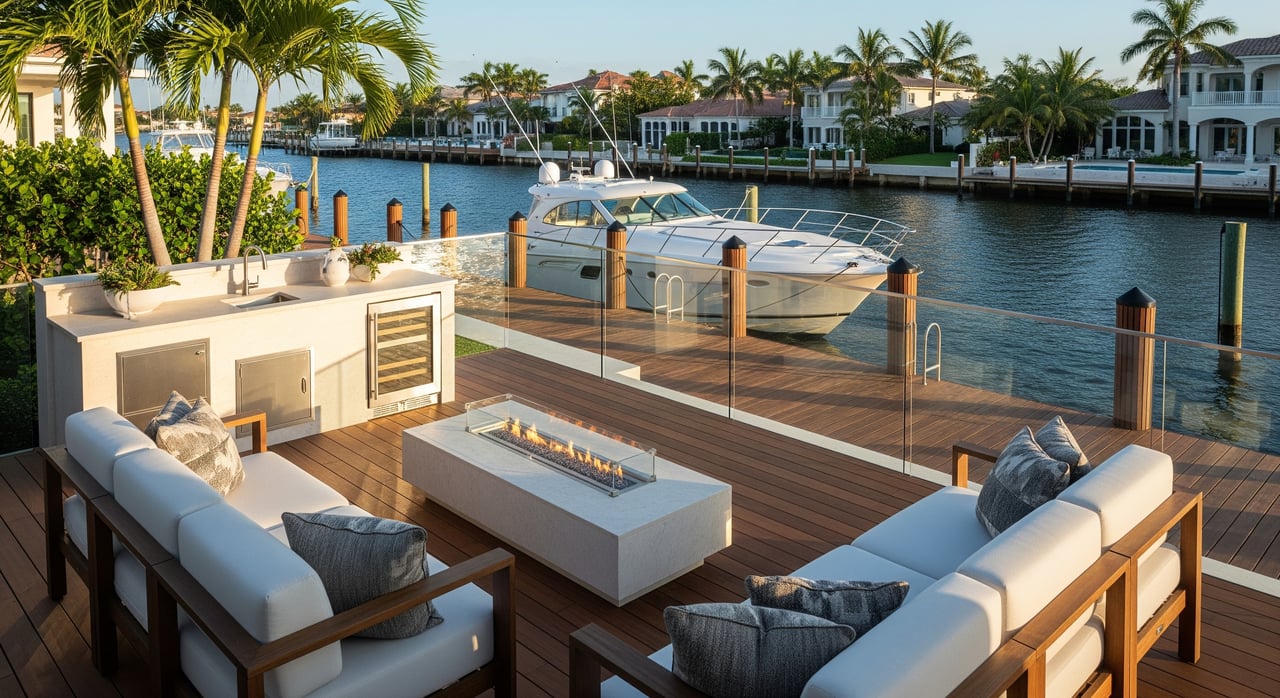
Morning coffee on the dock. Sunset dinners with a breeze. In Venetian Isles, outdoor living is a big part of why you are here. The challenge is that salt air, strong sun, and storm season can be tough on anything you build. The good news: with the right materials, smart designs, and proper permits, you can create beautiful spaces that last and add value.
Below, you’ll find durable, code-aware ideas for docks, shade, kitchens, lighting, and maintenance, plus practical steps to move a project forward. Let’s dive in.
Why coastal design matters
Venetian Isles faces high humidity, salt spray, strong UV, summer thunderstorms, and tropical storm risk. These conditions drive how you plan, build, and maintain outdoor spaces. Choices that work inland can fail fast on the water.
Wind loads near the water must meet Florida Building Code coastal requirements, so engineered connections and hurricane-rated components are important. Designs that adapt to tide and future sea-level change, like higher walkways or floating docks, can reduce future retrofit costs.
If you are selling, buyers expect usable outdoor space that holds up: safe dock access, low-maintenance materials, and covered seating. If you are buying, look for durable choices and recent inspections that signal long-term value and lower upkeep.
Dock and dockside living
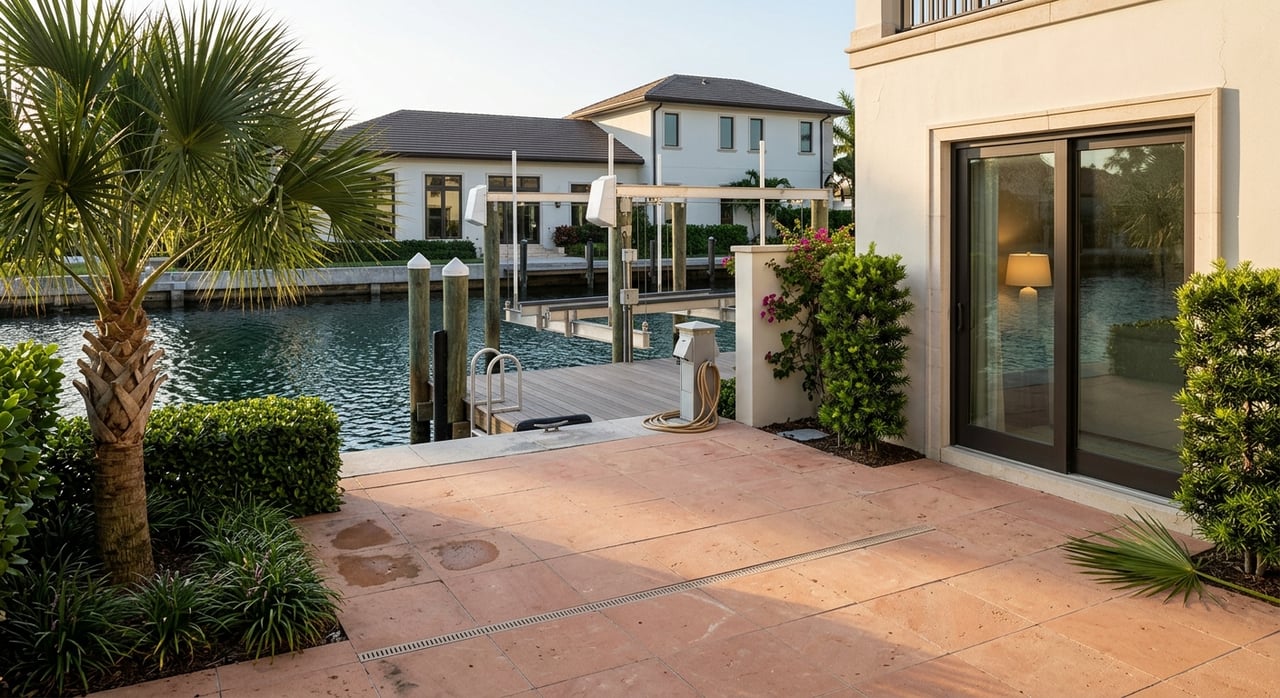
A well-planned dock is the heart of waterfront living. You will typically choose between a fixed piling dock or a floating dock.
- Fixed piling docks are common when water depths or boating needs require them. They feel solid underfoot and can handle lifts for larger boats.
- Floating docks rise and fall with tides and can help you adapt to sea-level changes. They often simplify access and can reduce some maintenance.
Add practical accessories to boost daily use: boat lifts or davits sized for your watercraft, cleats and fenders, a ladder, integrated storage, bench seating, and a fish-cleaning station. Use anti-slip decking and plan for drainage to keep surfaces safe.
For longevity, choose marine-grade materials and fasteners. Underwater hardware should be 316 stainless or approved marine alloys. Keep in mind that dock footprint and shading can be regulated, and shoreline vegetation such as mangroves may be protected and require permits for trimming.
Seller tip: a certified, code-compliant dock with a recent inspection on file is a strong selling point. Buyer tip: confirm the lift capacity, clearance, and ease of upkeep before you fall in love with a view.
Shade structures and screened rooms
Shade turns a patio into a living room. Options range from aluminum pergolas and louvered roof systems to retractable awnings, covered lanais, and screened porches.
Look for wind-rated products with engineered anchoring. Many retractable systems should be retracted for storms. For comfort, pair shade with ceiling fans, and add a misting system if it complies with community rules.
Screened enclosures can reduce insects and increase everyday use, but they must meet structural code. Durable, leak-free connections matter during inspections and appraisals.
Outdoor kitchens that last
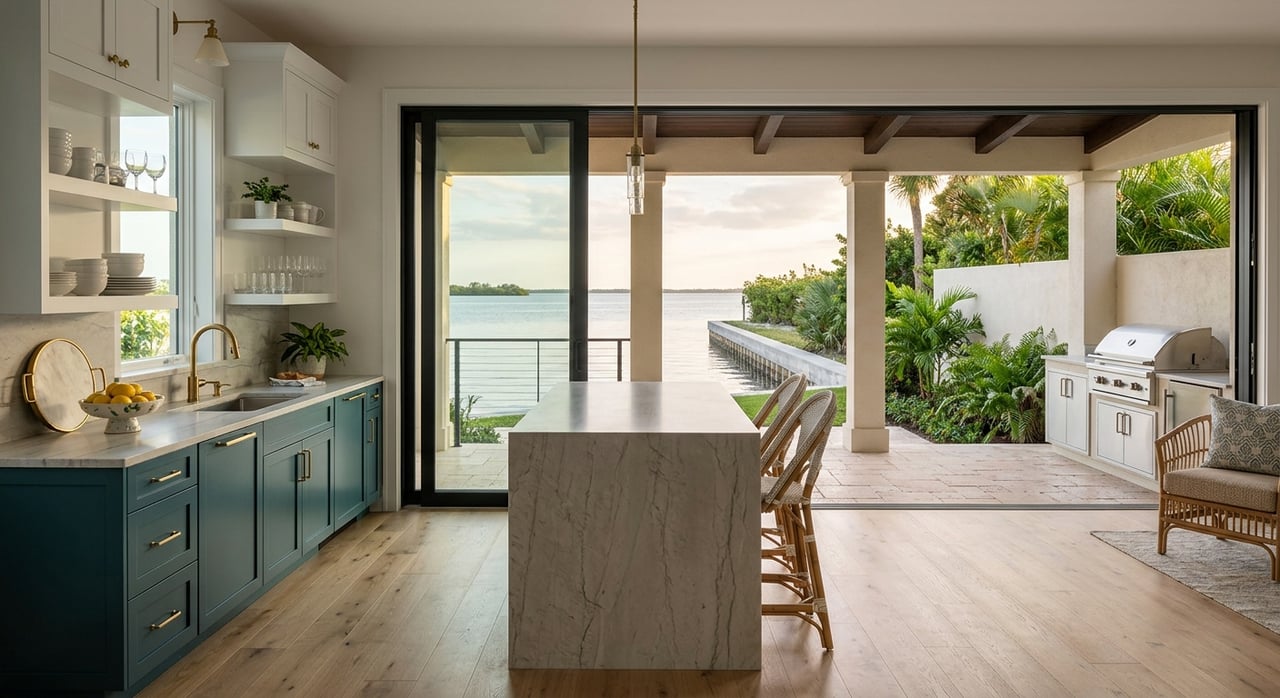
Outdoor kitchens shine on the water, but coastal conditions amplify wear. Build with marine-minded choices: stainless-steel appliances and weatherproof cabinets, simple and sturdy counters, and a sink with proper potable water connections.
Place cooking surfaces away from combustible siding and include ventilation. Follow gas and electrical codes, use GFCI protection, and consider elevating connections above base flood elevation where required. Rinse metal surfaces and use protective covers to slow corrosion.
Well-executed kitchens can set your property apart. Poor installations or noncode gas and electrical work can be a liability and hurt resale.
Lighting and evening ambiance
Extend your outdoor hours with a layered plan. Low-voltage LED fixtures reduce heat and energy use. Choose housings with IP65 or higher ratings suited to marine environments.
Add path and step lighting for safety, accent uplighting for trees or architectural features, and low-glare dock lighting that respects navigation and local rules. Motion sensors and timers help reduce energy waste and discourage theft.
Clean lenses, check seals, and replace corroded connectors promptly to keep everything working.
Materials that beat salt air
Choose materials that are proven in coastal Florida. Investing here lowers maintenance and protects value.
- Structural framing: powder-coated, marine-grade aluminum resists corrosion and is great for pergolas and railings. Pressure-treated wood is common for piles and substructure, but it needs good ventilation and detailing. Tropical hardwoods like Ipe or Cumaru are very durable and attractive, though they require periodic oiling.
- Decking: composite PVC or capped wood-plastic decking resists rot and fading. Look for marine-grade lines with UV warranties. For floating docks, closed-cell PVC or composite floats outperform foam-core options.
- Fasteners and hardware: specify 316 stainless or silicon bronze in splash zones. Avoid zinc-plated hardware near tides. Address galvanic corrosion when combining metals with isolators and coatings.
- Fabrics and soft goods: marine-grade textiles, such as Sunbrella-type fabrics, resist UV, mildew, and salt. Use quick-drying foam and storage that drains.
- Finishes and coatings: marine-grade paints and clear sealants shield wood and metal. Non-skid coatings improve dock safety. Plan for periodic re-application.
Quick upgrade checklists
Use these simple lists to guide your next steps.
Buyer walk-through checklist:
- Dock condition: look for solid pilings, secure fasteners, and non-slip decking. Ask for the last inspection report.
- Lift and clearance: confirm lift capacity and bridge clearance for your vessel.
- Shade and comfort: evaluate wind-rated shade, screened spaces, and fans.
- Lighting and power: check for low-voltage LEDs, GFCIs, and protected connections.
- Materials: verify composite or hardwood decking, marine-rated hardware, and fabrics.
Seller prep checklist:
- Repair or replace worn decking, loose railings, and corroded hardware.
- Service the boat lift, test GFCIs, and replace failed lighting.
- Deep-clean and seal wood; rinse metals and fabrics to remove salt.
- Gather permits, plans, inspections, and warranties in one file for buyers.
- Stage with durable cushions, outdoor rugs that drain, and a tidy dock.
Permits and professionals
Waterfront projects often need multiple permits. Start with Pinellas County Building and Development Review or your municipal office for parcel-specific requirements. Projects in or over tidal waters can trigger state review by the Florida Department of Environmental Protection and federal review by the U.S. Army Corps of Engineers. Work that affects mangroves typically requires special permits and may have seasonal restrictions.
Flood-zone design can affect elevation and foundation choices, and FEMA flood maps influence permitted designs and insurance. Many structures need engineered drawings to meet Florida Building Code wind requirements. Hire licensed contractors experienced in coastal construction, and schedule inspections as required. Keep all documentation organized for resale.
Professionals to engage:
- Licensed coastal or marine contractor for docks and seawalls.
- Structural engineer with coastal experience for major structures.
- Landscape pro familiar with salt-tolerant plants and shoreline stability.
- Licensed electrician and gas technician skilled in flood-zone installs and code.
- Permitting or environmental consultant for complex shoreline work.
Maintenance and lifecycle planning
Regular care protects your investment and supports resale.
Post-storm: inspect fasteners, railings, decking, anchor points, and any movement in piles or posts. Resolve issues quickly.
Quarterly to semiannual: rinse metals, fabrics, and frames with fresh water to remove salt. Clean drains and scuppers. Check anchors, cleats, and connectors.
Annual: schedule a professional inspection of dock pilings, lifts, and structural fasteners. Reseal or recoat decking and wood as recommended. Service gas appliances and test all GFCIs.
Every 3 to 5 years: proactively replace small, corrosion-prone items like hinges, latches, and seals.
Typical service life expectations vary by exposure and quality. Composite decking often lasts 15 to 25 years or more. Tropical hardwood can deliver 10 to 30 years with care. Marine-grade stainless hardware lasts many years if maintained, while lower grades can fail in a few seasons. Expect outdoor fabrics to last 3 to 8 years, depending on sun and upkeep.
Value and ROI for sellers
Focus on upgrades buyers value and inspectors respect.
High-impact improvements:
- Repair or replace deteriorated seawalls or docks to ensure safe, usable access.
- Add covered or screened outdoor living to expand practical space, with proper permits.
- Use low-maintenance decking and marine hardware to reduce visible deferred maintenance.
Risky or lower-ROI choices:
- Oversized or highly personalized outdoor kitchens that exceed neighborhood expectations.
- Any project built without proper permits or that does not meet code. These can derail closings and lower offers.
Plan your project
Start with a clear goal: daily lounging, boating, evening entertaining, or all three. Set a budget that includes engineered plans, permits, and quality materials. Confirm flood-zone and shoreline rules early.
Choose licensed, coastal-experienced pros and line up inspections. Keep permits, plans, and warranties organized for insurance and eventual resale. A thoughtful plan today saves time and money tomorrow.
Ready to create a waterfront space that works hard and looks incredible season after season? For local guidance, vetted contractors, and a plan that supports resale value in Venetian Isles, connect with Melody Stang. Let’s make your waterfront work for you.
FAQs
What dock type works best in Venetian Isles?
- Floating docks adapt to tides and future sea-level changes, while fixed piling docks suit certain water depths and larger lifts; choose based on your vessel and site.
Do I need permits for a dock or pergola in Pinellas?
- Most waterfront structures require permits, and state or federal review may apply in tidal waters; start with Pinellas County permitting for parcel-specific guidance.
What decking materials hold up to salt air?
- Composite PVC or capped composites resist rot and UV, while tropical hardwoods like Ipe are durable with periodic oiling; confirm marine-grade product lines.
How do I make an outdoor kitchen safer near the water?
- Use marine-grade stainless, follow gas and electrical codes with GFCI protection, provide ventilation, and consider elevating connections in flood zones.
What lighting is best for docks and paths?
- Low-voltage LED fixtures with IP65 or higher ratings, path and step lights for safety, and low-glare dock lighting that respects navigation guidelines.
How can I reduce maintenance on waterfront spaces?
- Rinse salt regularly, choose 316 stainless hardware and marine fabrics, keep seals and coatings current, and schedule annual professional inspections.