Six-fifteen on a Saturday and the trailer line at Coffee Pot Park is already backed onto the street. Someone is standing calf-deep at the ramp's edge, watching their bunk trailer settle into mud instead of water, because the tide table said one thing and the ramp said another. Behind them, three cars with no trailers have taken spots meant for boats. Nobody is happy about it, and this happens often enough that it barely qualifies as news anymore in Granada Terrace and the Coffee Pot Bayou blocks around it.
If you live within walking distance of this park, you already know the ramp is small. What most people miss is that the ramp being small is not a flaw in an otherwise perfect neighborhood amenity. It is the reason the park works at all for everyone who isn't hauling a boat.
The Ramp Was Built For Skiffs, Not Center Consoles
Coffee Pot Park's launch is a single lane with no floating dock, sitting at 1st Street NE and 31st Avenue NE along Coffee Pot Boulevard. It was never sized for the kind of boats that get trailered around Tampa Bay on a summer weekend. Boaters who track these things closely describe it as a neighborhood ramp best suited to skiffs and bay boats under 20 feet, and they mean that as a real constraint, not a suggestion. Try to launch anything over 20 feet here and you risk putting your tow vehicle's rear tires in the water before the hull floats free.
Tide matters more here than at most Pinellas ramps. At low tide, the water can run out before a heavier boat has enough depth to launch, which is exactly what was happening to that trailer at 6:15. Parking compounds the problem. There are roughly a dozen trailer spots at the lot, and when they fill, street parking spills into the surrounding blocks. Residents notice, and they are not shy about it.
The comparison to other nearby ramps makes the pattern clearer.
| Ramp | Lanes | Trailer Parking | At Low Tide | Realistic Boat Size |
|---|---|---|---|---|
| Coffee Pot Park | Single lane, no floating dock | About a dozen spots | Ramp can run dry before a boat floats free | Skiffs and bay boats under 20 feet |
| Crisp Park (Poplar Street NE) | Two ramp areas with floating docks | Larger lot | Deeper cut, more forgiving | Skiffs through 21-foot bay boats |
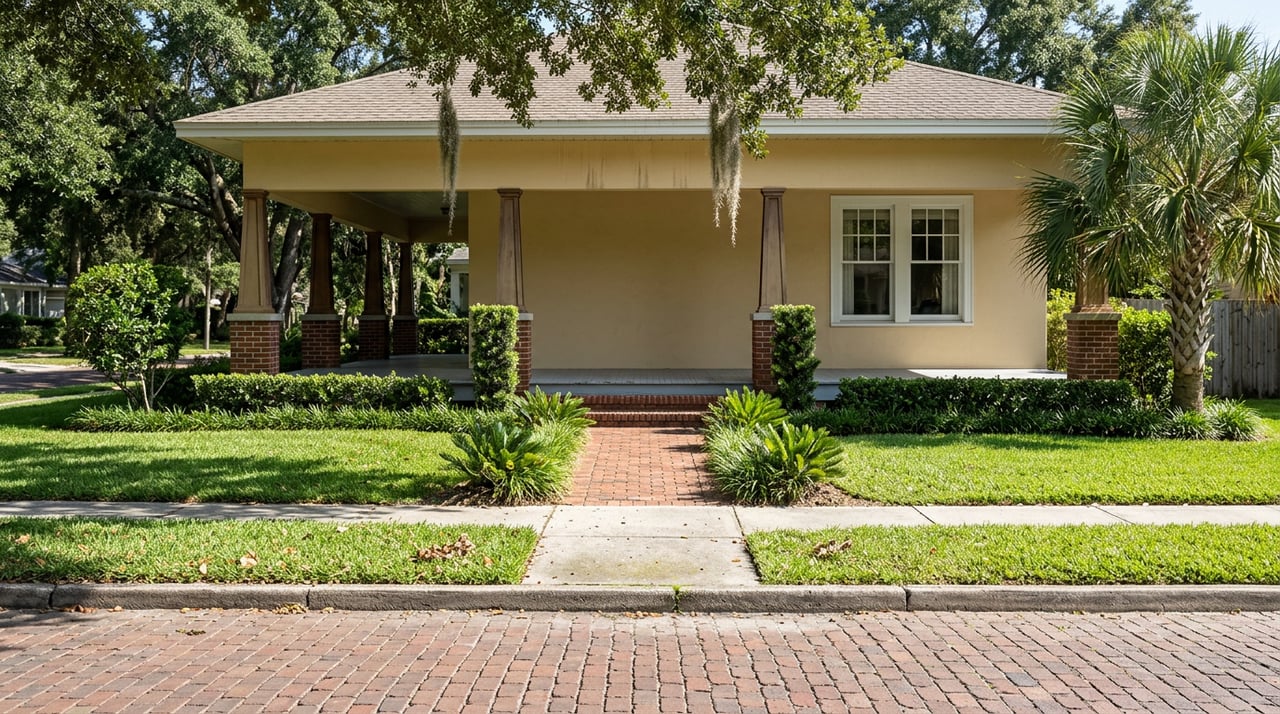
Crisp Park, a few minutes north, is where boaters send each other when Coffee Pot is packed or the tide is wrong. That overflow relationship is not an accident of geography. It is what happens when a small neighborhood ramp sits inside a historic district that was platted for parkways and plazas, not for boat trailers.
So What Is The Park Actually For
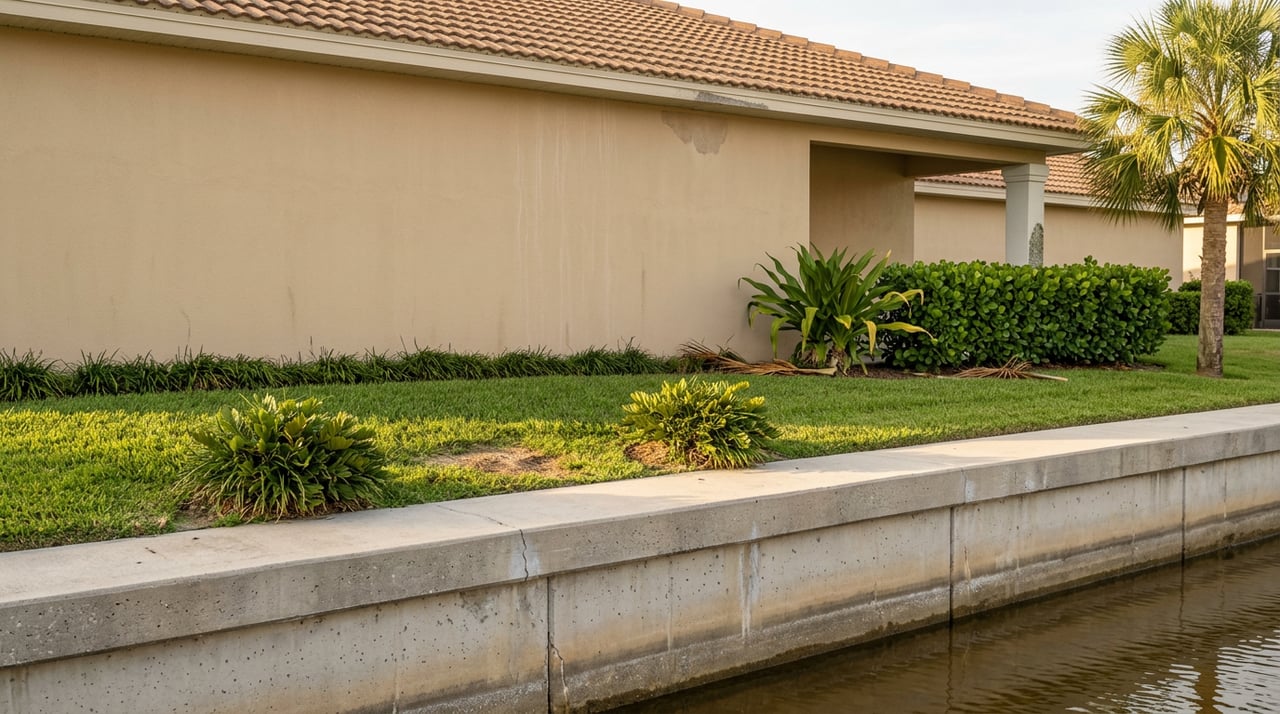
Once you stop thinking of Coffee Pot Park as a boat launch that happens to have a nice view, its actual function becomes obvious. The park's real asset is the sidewalk that runs along the bayou, and it does more work for more people, more often, than the ramp ever will.
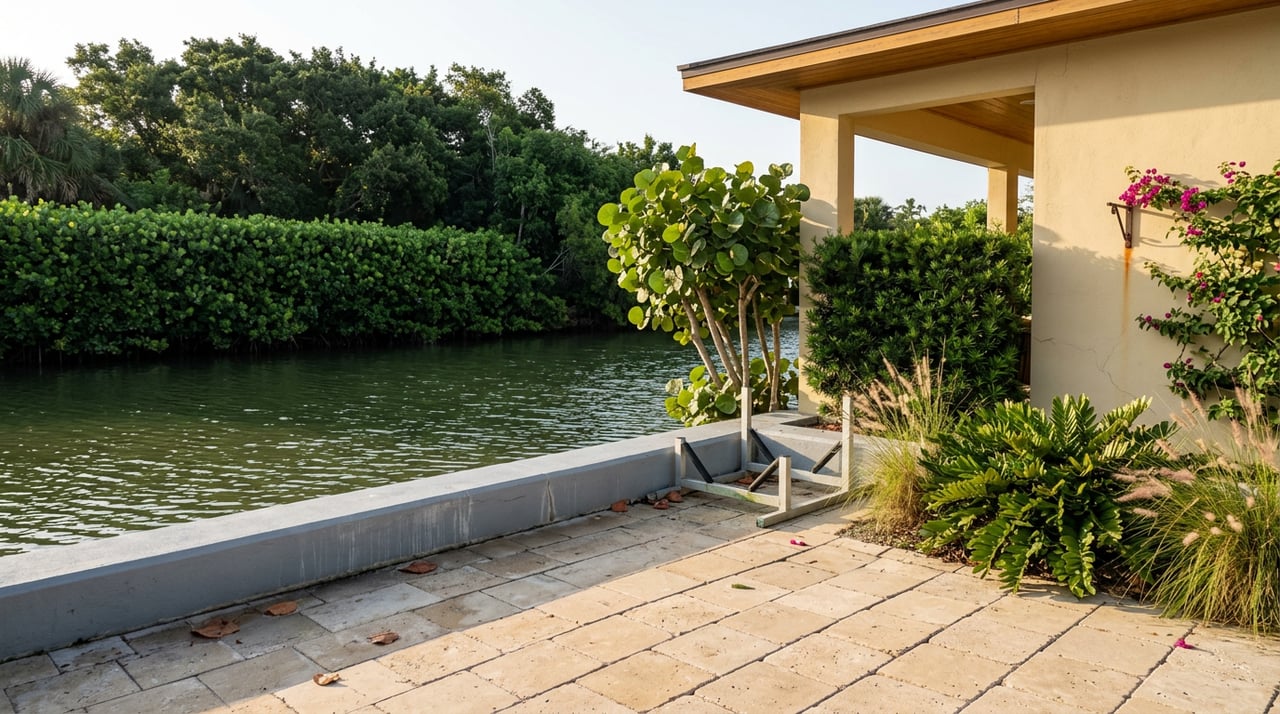
That sidewalk is wide enough for joggers, cyclists, dog walkers, and stroller traffic to share without much friction, and it runs directly along the water instead of behind a wall of private lots. Locals fish from the seawall here. Kayakers use the same launch area as trailer boats, minus the tide anxiety, since a kayak doesn't need three feet of water to get moving. On any given morning you'll see more people using the park on foot or by bike than by trailer, even though the boat ramp is the feature that gets the park its name in most listings.
The wildlife along this stretch is part of the daily texture, not a special-occasion sighting. Manatees move through the bayou often enough that longtime walkers plan routes around where they've seen them before. Dolphins show up too. Pelicans dive for bait fish right off the dock, close enough to watch without binoculars, and anyone who has stood at the seawall for more than a few minutes has heard the splash of bunker jumping somewhere nearby. None of this requires a boat. It requires showing up on foot.
There's a version of this park that a first-time visitor sees: a small, pretty launch with a playground and picnic shelter. There's a different park that a Granada Terrace resident actually uses, and it has almost nothing to do with trailers.
The Sidewalk Goes Farther Than You Think
The bayou-side path at Coffee Pot Park doesn't dead-end at the parking lot. It connects into St. Petersburg's larger network of downtown waterfront parks, meaning a walk that starts at Granada Park can continue south along the shoreline toward downtown without ever leaving a sidewalk built for exactly that purpose.
Head north instead and the same corridor eventually links into the path system reaching Weedon Island Preserve, a nearly 3,195-acre natural area managed by Pinellas County. Weedon Island isn't a pocket park. It has more than 4.7 miles of boardwalks and trails through mangrove forest and tidal flats, a cultural and natural history center, and a paddling trail through the preserve's islands and waterways. It's one of the more significant archaeological sites in the region, with artifacts on display from the Weeden Island culture dating to around 200 A.D., nearly 1,800 years before today.
That's the part of the neighborhood's location that rarely makes it into a listing description. Granada Terrace isn't just close to water. It sits on a walking and biking corridor that runs from a county nature preserve on one end to downtown St. Petersburg's park chain on the other, with the neighborhood itself as the connective tissue in between.
What This Means If You're Timing Your Weekend Around The Ramp
If you do want to launch a boat from Coffee Pot Park, a few habits save most people the 6:15 a.m. disappointment.
- Check the tide table before you leave, not after you back down the ramp. Low tide here isn't a minor inconvenience, it can leave the ramp too shallow for anything but the smallest hulls.
- Keep expectations realistic on boat size. This ramp is built for skiffs and bay boats under 20 feet, not center consoles.
- Have Crisp Park in mind as a backup. It's close enough to be a reasonable plan B when Coffee Pot's lot is full or the tide is against you.
- If you're not launching a boat at all, you're not missing out. The sidewalk, the kayak access, and the wildlife along the seawall are the parts of this park that don't depend on tide charts or trailer parking.
None of this is a knock on the park. It's an honest read of what it was built for, and what it's become instead. A ramp sized for a 1920s waterfront neighborhood was never going to keep pace with modern bay boats, and the park has settled into a role that suits the neighborhood better anyway: a walkable, bikeable spine along one of the prettiest stretches of shoreline in Old Northeast, with a boat ramp attached almost as an afterthought.
If you've lived here a while, none of this changes your Saturday. But it might change how you describe the park to someone visiting for the first time, and it's worth knowing exactly what you're pointing them toward when you say "there's a park down by the water." It's not really about the ramp. It never was.
For more on what makes this stretch of Coffee Pot Bayou distinct, from its Mediterranean Revival architecture to its place in St. Petersburg's historic district framework, Melody Stang has covered the waterfront charm of Granada Terrace and Coffee Pot Bayou in more depth. If you're weighing a move into this corner of Old Northeast, or just want a broker who already knows which tide chart to check before Saturday morning, let's connect and schedule a consultation.