Wondering if a Snell Isle waterfront home can actually work for your boat, not just look good in listing photos? That is the right question to ask. If you want a home where boating is part of daily life, you need to look beyond the view and understand dock access, water depth, flood planning, and long-term shoreline upkeep before you make an offer. Let’s dive in.
Why Snell Isle Appeals to Boaters
Snell Isle offers an in-town waterfront setting within St. Petersburg, with water access tied to Coffee Pot Bayou, Smacks Bayou, and Tampa Bay. For many buyers, that mix is the draw. You get a waterfront lifestyle with nearby city amenities instead of a more remote, marina-centered setup.
The area also has public waterfront amenities nearby, including Snell Isle Park, Coffee Pot Riviera Park, Northeast Exchange Club Coffee Pot Park, Vinoy Park, North Straub Park, and Sunlit Cove Boat Ramp. If your private dock setup is limited, these access points can still add flexibility to your boating routine.
St. Petersburg is a coastal city with 244 miles of shoreline, and local emergency services are built with water access in mind. St. Pete Fire Rescue notes that Shore Acres Station 12 serves Snell Isle and that the department maintains marine and dive rescue capability for water-related emergencies.
Start With the Boat, Not the Dock
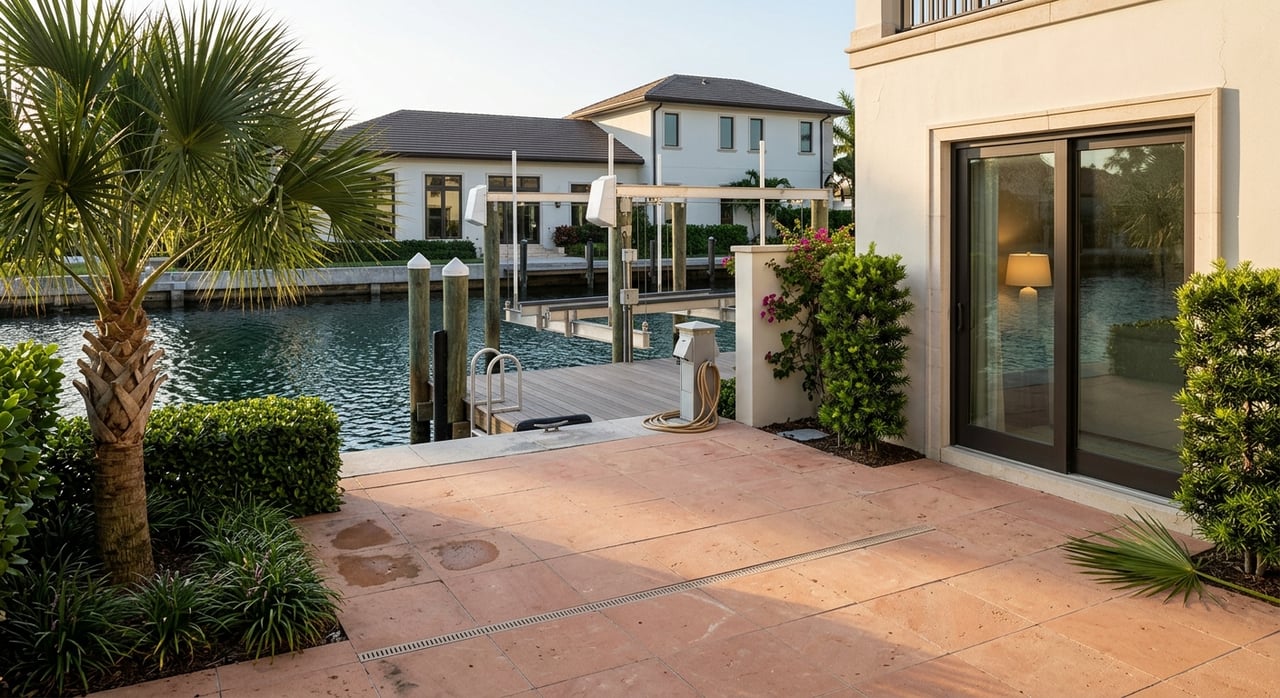
One of the biggest mistakes waterfront buyers make is assuming that a docked property is automatically boat-friendly. In Snell Isle, the more important question is whether the lot, slip, channel, and low-tide conditions fit the specific boat you plan to use.
Pinellas County code requires 18 inches of water depth at the slip at mean low tide in tidal waters. The code also requires a continuous 18-inch-deep channel to open water. That means a dock can look usable at high tide but still create problems if the route out becomes too shallow at low tide.
This is why you should evaluate more than the backyard setup. You want to know how your boat would sit at the slip, how easily you can turn or maneuver, and whether the path to open water stays workable under normal tidal conditions.
Questions to Ask About Boat Fit
Before you move forward on a waterfront home, ask practical questions tied to your actual boating habits:
- What type and size of boat do you plan to keep at the property?
- Is there enough depth at the slip at mean low tide?
- Is there a continuous channel to open water?
- Does the route out feel manageable for your comfort level and boating style?
- Would a lift, tie poles, or dock layout need to change to support your boat?
A beautiful dock is only useful if it matches how you plan to live on the water.
Understand Dock and Seawall Permits
In Pinellas County, waterfront structures are regulated more closely than many buyers expect. Permits may be required for private single-family docks, multi-use docks, commercial docks, marinas, seawalls, riprap, tie poles, and dredging or filling in county waters.
Since July 1, 2024, applications are submitted through the county Access Portal. That matters because even work that seems minor, such as changing a lift or repairing shoreline features, can involve review and records.
Buyers should also know that dock design is not unlimited. County code says boat lifts may be denied if they would adversely affect natural resources, and docks, boardwalks, or piers may not run parallel to the shoreline or seawall within the littoral zone. Certain roofed structures and vertical walls are restricted as well.
Why Existing Records Matter
If a property already has a dock, lift, seawall, or prior dredge and fill work, ask for documentation before closing. You want records that match the current configuration, not just proof that work happened at some point in the past.
This step can help you avoid surprises after purchase. If an existing setup does not align with permit history, future repairs or changes may become more complicated.
Check for Environmental Constraints
Not every waterfront lot has the same development flexibility. Pinellas County provides a coastal environmental resource zone map for areas with nearby seagrass or mangroves, and projects may be reviewed for environmental and navigational impacts.
That means a home with water frontage may still have limitations on what can be added, repaired, or reconfigured. If you are considering dock updates, seawall work, or broader shoreline changes, it is smart to evaluate the lot itself as carefully as the house.
For buyers planning a major remodel, teardown, or elevation project, this becomes even more important. Waterfront improvements often involve added floodplain and permit review, so pre-offer diligence should cover both the structure and the site.
Budget for Flood and Storm Realities
Waterfront ownership on Snell Isle comes with added planning, and flood due diligence should be part of that process from day one. Pinellas County says flood zones and evacuation zones are different systems, so you need to check both.
FEMA identifies the official source for flood-hazard information through its Flood Map Service Center, and Pinellas County notes that most homeowners policies do not cover flood damage. In higher-risk A or V zones, flood insurance may be required for federally backed mortgages.
For many waterfront buyers, this means flood insurance is not an afterthought. It is part of the true cost of ownership and should be built into your budget early.
Flood Questions to Answer Before Closing
Use these questions as part of your due diligence:
- What is the property’s exact FEMA flood zone?
- What is the Pinellas County evacuation zone?
- What are the likely flood insurance costs?
- Has the property had flood-related repairs or mitigation work?
- If you plan future improvements, what added floodplain review may apply?
These answers can shape affordability just as much as taxes, maintenance, and marina alternatives.
Think Long Term About Shoreline Maintenance
A boat-friendly waterfront home is not only about access today. It is also about how the shoreline, dock, and protective features will perform over time.
NOAA notes that coastal communities face challenges from sea level rise and more intense storms. For homeowners, that means seawalls, docks, lifts, and shoreline treatments should be treated as long-term operating features rather than one-time cosmetic upgrades.
If a property already has a seawall or dock, ask for the permit history, repair records, and any known replacement plans. Pinellas County’s permit system covers docks, seawalls, riprap, tie poles, and dredge and fill work, so future maintenance may be more involved than a typical home improvement project.
Hard Shorelines vs. Living Shorelines
NOAA distinguishes hard shoreline armoring from living shorelines. Living shorelines use natural materials to stabilize the edge, reduce erosion, add habitat, and are often lower-maintenance than hard structures.
That does not mean every lot is a candidate for the same approach. It does mean you should ask whether the current shoreline strategy fits your long-term goals, maintenance tolerance, and future planning for the property.
Public Launch Access Adds Flexibility
Even buyers who want a private dock can benefit from nearby launch options. Public access points such as Coffee Pot Riviera Park, Northeast Exchange Club Coffee Pot Park, and Sunlit Cove Boat Ramp can be useful if your home dock is better suited to one vessel type, temporary conditions change, or guests bring their own equipment.
This flexibility is part of what makes Snell Isle attractive. You are buying into a waterfront lifestyle with multiple ways to enjoy the water, not relying on a single feature behind the house.
A Smarter Way to Evaluate Snell Isle Waterfront Homes
When you tour boat-friendly homes on Snell Isle, it helps to think in layers. First, confirm the home fits your lifestyle and goals. Then confirm the waterfront setup works for your actual boat, your insurance budget, and your comfort with long-term maintenance.
That kind of due diligence can protect both your enjoyment and your investment. A great waterfront home is not just one with a dock. It is one where the dock, channel, shoreline, permits, and ownership costs all work together.
If you are considering a boat-friendly waterfront home on Snell Isle, working with a local specialist can help you ask better questions before you commit. To explore homes and get concierge guidance tailored to your waterfront goals, connect with Melody Stang.
FAQs
What makes a Snell Isle waterfront home boat-friendly?
- A boat-friendly Snell Isle home should have a dock setup, water depth at mean low tide, and a continuous channel to open water that fit your specific boat.
What dock permits should buyers check on a Snell Isle home?
- Buyers should verify permits and records for docks, boat lifts, seawalls, riprap, tie poles, and any dredge or fill work that matches the property’s current configuration.
Why do flood zones matter when buying on Snell Isle?
- Flood zones affect insurance needs, financing requirements for some buyers, and the overall cost of owning a waterfront property.
Are evacuation zones the same as flood zones in Pinellas County?
- No. Pinellas County says flood zones and evacuation zones are different systems, so buyers should review both before closing.
Can you change a dock or boat lift on a Snell Isle property later?
- Possibly, but changes may require county review and permitting, and some designs or lifts may be restricted based on navigational or environmental impacts.
What if a Snell Isle home’s private dock is not ideal for my boat?
- Nearby public launch options, including Coffee Pot Riviera Park, Northeast Exchange Club Coffee Pot Park, and Sunlit Cove Boat Ramp, can provide added flexibility.